

In more than 23 years of supporting new families in Singapore, one question keeps coming back to me. What does a father's role really look like, and who decided? Some of the clearest answers I have found come from a community of hunter-gatherers in the Central African rainforest.
What the research says
The Aka people live in the forests of the Central African Republic and the Republic of the Congo. The American anthropologist Barry Hewlett lived among them for long stretches and studied their family life over many years. His book on Aka fathers, Intimate Fathers, is still widely quoted.
Online, his work tends to be retold as the story of "fathers who breastfeed." What he actually observed is gentler, and to me it matters more.
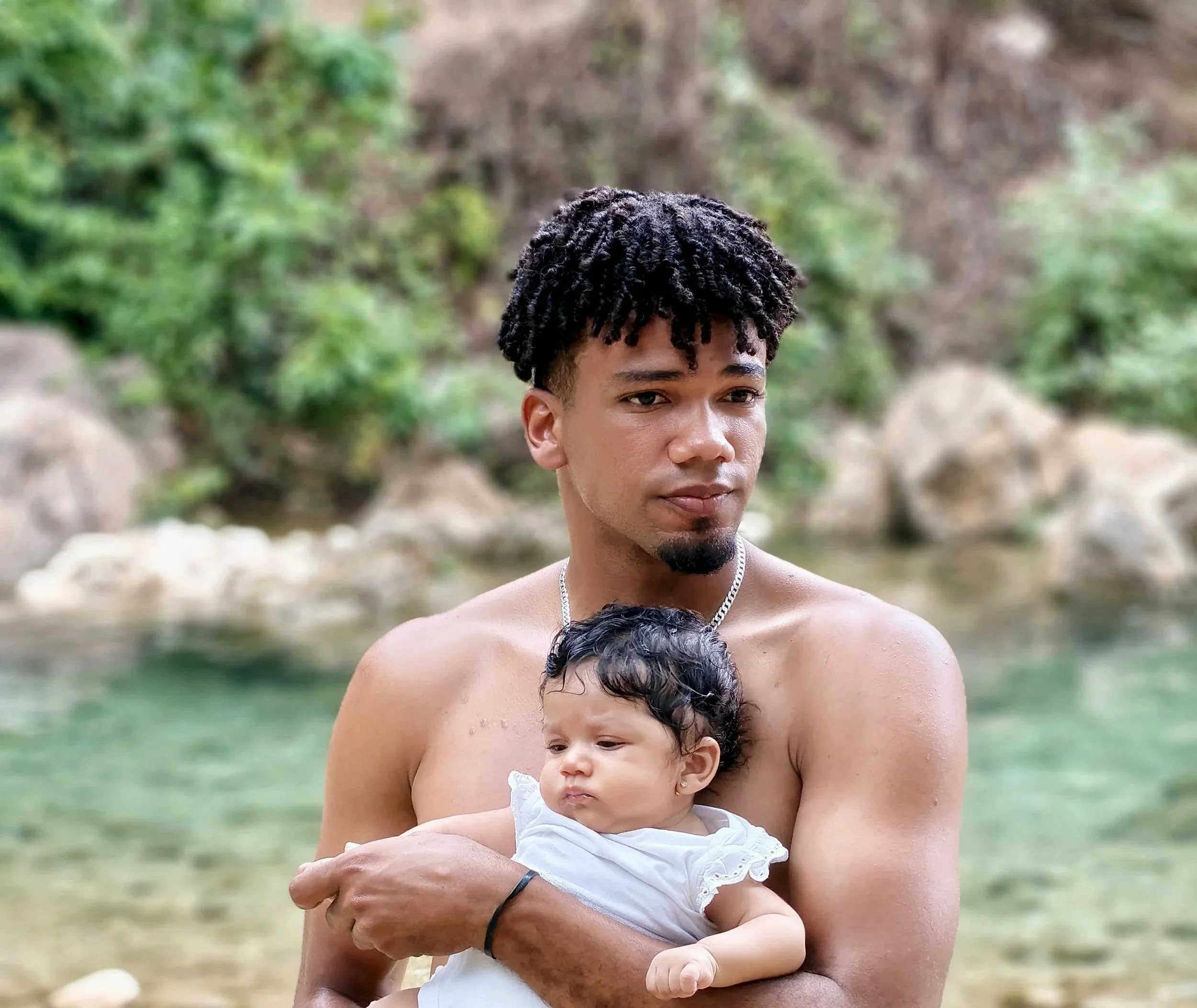
Aka fathers stay within arm's reach of their babies for close to half the day, about 47 per cent of the time. No other human society on record comes near that level of father involvement. Dads carry, cuddle, kiss and settle their babies as an ordinary part of daily life.
When the mother is away and the baby becomes fussy, an Aka father may offer his own nipple for the baby to suck on. No milk comes. This is comfort sucking, known as non-nutritive sucking, and it helps the baby calm down. The Canadian breastfeeding specialist Dr Jack Newman made the same point back in 2005: the practice is about soothing the baby, and milk has nothing to do with it.
Why do men have nipples at all?
Every human embryo starts from the same basic plan. Nipples form in the early weeks of pregnancy, before the hormones that guide a baby's development as male or female come into play. By then the nipples are already in place, and they stay.
So the Aka have found a loving use for something every father already has. I find that rather beautiful.
Comfort without shame
What stays with me most is how ordinary all of this is for them. Nobody in an Aka camp would tell a father he is less of a man for soothing his baby at his chest. I imagine boys who grow up with fathers like these never feel they must push away gentleness to prove they are men.
Their way of life helps. The Aka hunt with large nets, and whole families go out together, men, women and children alike. With mothers working alongside fathers, dads naturally take their turn with the baby. Care is spread across the whole camp. A baby may have up to 20 different caregivers, and around nine in ten Aka mothers say other women sometimes nurse their babies.
For generations, many of our own families have been organised differently. The man went out to earn, and the woman kept the home and raised the children. Pride and ego became bound up in those roles, for both men and women, though in my experience men often carry more of it. The stigma around men doing "women's work" has lasted a very long time.
The world our young couples live in has changed, though. Many women now earn as much as their husbands, or more. The question I keep asking is whether our ideas about who cares for the children have caught up.
Fathers today: more leave and more choice
Singapore has moved in the right direction. Fathers now receive four weeks of mandatory Government-Paid Paternity Leave. Since 1 April 2026, couples also share 10 weeks of Shared Parental Leave, on top of the mother's 16 weeks of maternity leave. The shared weeks are split five and five by default, and couples can rearrange them to suit their family, as long as they are used within the baby's first year. Altogether, a couple can have up to 30 weeks of paid leave.
Leave helps most when fathers actually take it. When the new scheme was announced in 2024, almost half of fathers were still leaving their paternity leave unused, so there is some way to go.
Some of the most valuable things a father can do with those weeks:
Be present in the early days, when breastfeeding is being established and the mother is recovering. Bring her water and food, manage visitors and guard her rest.
Take on skin-to-skin contact, burping, settling, bathing and nappy changes. These everyday moments are how a secure bond with dad is built.
Save a block of leave for when maternity leave ends, so the return to work feels less abrupt and the baby has more time at home with a parent.
Learn your baby's cues, so you grow into a confident carer in your own right.
The fathers who stay home
Some fathers go further still. Ministry of Manpower figures show the number of stay-at-home fathers in Singapore rose from about 1,900 in 2022 to around 3,000 in 2025, while the number of stay-at-home mothers fell over the same period.
I have met a number of these men over the years, and some of them have a real gift for it. I think of fathers with four, five, even six children, driving them to school and tuition, sitting with one child over homework while feeding the baby, then getting the housework done and dinner on the table. Their home and time management would impress any company director.
For many couples this arrangement makes good sense. The wife may earn more, and the husband may be better suited to the daily running of family life. Even so, a study by the Institute of Policy Studies found that stay-at-home fathers here still face stigma, including remarks that they are "wasting" their potential. Those remarks say more about old expectations than about the fathers themselves.
Families differ. Some mothers thrive at home. Others find full-time homemaking lonely or unfulfilling, and when those feelings go unspoken, low mood can creep in and affect the whole household. Nobody is to blame when that happens. It simply means the arrangement needs another look.
In the end, it comes down to the agreement between husband and wife. Who earns, who stays home, who does the school runs and the night feeds are decisions best made through honest conversation about each person's strengths, and revisited as the children grow. When both partners feel respected and the home runs well, they have found the right arrangement for their family.
What I am noticing in young families
There is something deeper I have been seeing for some years now.
Over several generations, many Singapore parents have pushed their children very hard. Our parents did it, many of us did it too, and most of it came from love and worry about the future. Tuition, enrichment, sports, music and exams filled childhood year after year. Many of those children never showed their burnout as kids, or even at university. They kept going.
In my work I often meet that burnout much later, in young adults who are now partners and new parents. Some carry a long childhood of performing and achieving, and parenthood stirs it all up again. Others look at parenthood and quietly decide they cannot face that race a second time, this time on behalf of a child.
The national picture reflects this. Singapore's resident total fertility rate fell to 0.87 in 2025, the lowest on record. Speaking this year, Minister Indranee Rajah described a growing sense that Singapore is a difficult place to raise children, pointing to the cost of living and to stress and competition at every stage of life, from school to work. Among people without children, cost and the expected stress of raising them are the two biggest barriers. The Institute of Mental Health's national study of young people aged 15 to 35 found that about one in four reported severe or extremely severe symptoms of anxiety.
So when a couple tells me they have chosen to remain child-free because they want freedom, rest and a life that feels like their own, I rarely hear selfishness. Very often I hear the burnout of a long childhood that never let them stop.
What we can learn from the Aka
I am not romanticising rainforest life. The Aka live with real hardship, with very little access to medical care and high rates of infant death. Still, a few of their lessons sit well with our own families.
Closeness is at the centre of good parenting. When Aka parents were asked what makes a good mother or father, staying physically close to the child was mentioned for both. Attachment research has been telling us the same thing for decades: babies thrive on warm, responsive and consistent care, and they can form that secure bond with their father as well as their mother.
Comfort is a healthy need. A baby who wants to stay at the breast after the milk slows, or who settles best on dad's chest, is calming a young nervous system through sucking and being held. That is biology at work.
Raising a child was always meant to be shared. The Aka baby with 20 caregivers is well held. Our version might be grandparents, friends, a postnatal doula, a supportive employer or a parents' group. The most helpful support leaves room for new parents to find their own way.
A slower pace is allowed, too. If we want young people to welcome family life again, perhaps we need to show them that childhood can be lived more gently, and parenthood can be as well.
For young parents
There is no single right way to share the load. Talk it through, lean on each other's strengths, and change the plan when it stops working. You are free to set aside the scripts you were handed.
And to the dads: you need no milk to be a wonderful father. Show up, stay close, and let your baby learn that your arms are a safe place. The Aka have been showing us how for generations.
About the author
Pamela Vanessa Lim is a Health Psychologist in research and Integrative Nutrition & Movement Therapist, focused on maternal and child health in Singapore. Read more about her work here.
Sources
Arivalagan, Y. (2020). Stay-at-home fathers and their families: What lessons for policymakers? Institute of Policy Studies, Lee Kuan Yew School of Public Policy, National University of Singapore.
Hewlett, B. S. (1991). Intimate fathers: The nature and context of Aka Pygmy paternal infant care. University of Michigan Press.
Hewlett, B. S., Hudson, J., Boyette, A. H., & Fouts, H. N. (2019). Intimate living: Sharing space among Aka and other hunter-gatherers. In N. Lavi & D. E. Friesem (Eds.), Towards a broader view of hunter-gatherer sharing (pp. 39-56). McDonald Institute for Archaeological Research.
Ministry of Health, Singapore. (2024, September 19). Whole-of-society efforts to support mental health and well-being of youths in Singapore [Press release].
Ministry of Manpower, Singapore. (2026). Labour force in Singapore 2025. Manpower Research and Statistics Department.
Ministry of Social and Family Development, Singapore. (2026). 10 weeks of Shared Parental Leave from 1 April 2026 [Press release].
Newman, J., quoted in ABC News. (2005, June 16). Men can also offer their babies a nipple. ABC News.
Rajah, I. (2026). Speech at the Population Association of Singapore Conference 2026. Strategy Group, Prime Minister's Office, Singapore.
Singapore Department of Statistics. (2026). Population trends 2026.
Wong, L. (2024, August 18). National Day Rally 2024. Prime Minister's Office, Singapore.